


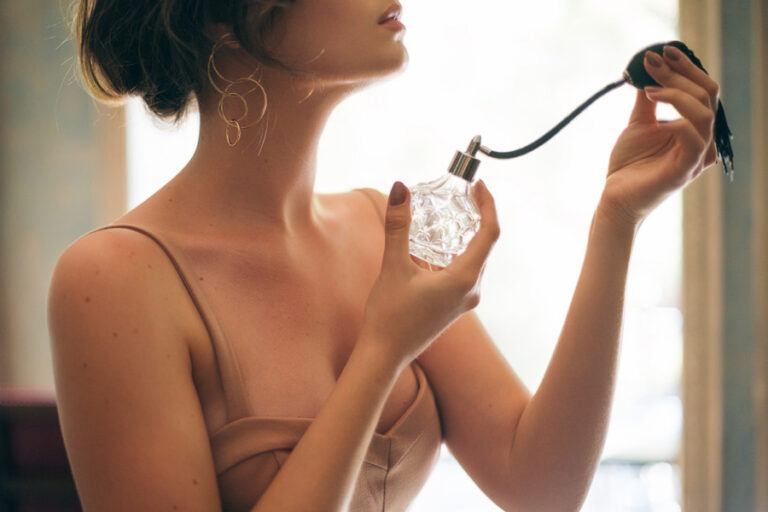

Why perfume is becoming less about smelling “pretty” and more about expressing who you are.
If you ask Aspire editor-in-chief Lauren Zuidema about perfume, get ready for a long conversation.
Lauren is, by her own admission, obsessed with fragrance. Her collection currently numbers well over 60 bottles, which is either a perfectly reasonable beauty collection or evidence that she may have a problem. We prefer to call it dedication.
She has a perfume for memories, one for feeling polished, one that makes her happy, and others she bought because she couldn’t get them out of her mind. She also likes to layer scents, sometimes three at a time.
That’s the thing about fragrance: it’s almost never just about smelling good.
If perfume were only about smelling “pretty,” most people would only need one bottle. But now, we pick scents based on our mood, memories, the occasion, or even who we want to be that day.
The signature scent is no longer the only option.
SCENT AS SELF
Maybe you’re drawn to bright citrus. Maybe vanilla and gourmand notes are your weakness. You might prefer the grounding sophistication of woods, the drama of white florals, the intimacy of musk or the mystery of oud.
Of course, fragrance psychology isn’t a personality test. You can’t smell vanilla and declare someone a romantic, or oud and assume they’re mysterious. Memories, culture and experience shape our preferences. But we do tend to choose scents that make us feel something.
Confident. Comforted. Sexy. Energised. Nostalgic. Or simply delicious.
That’s what makes perfume more interesting than just another bottle on your dresser.
THE PSYCHOLOGY OF SCENT
Not much can take us back in time the way a scent can.
A certain perfume can remind you of a past relationship. Sunscreen can make you think of holidays. The smell of rain might bring back childhood memories. Even a soap or aftershave can remind you of someone you haven’t thought of in years.
Our scent memories can be remarkably specific, which is why fragrance often becomes tied to particular people, places and periods of our lives.
For Lauren, her collection is less a row of pretty bottles than a collection of olfactory bookmarks. Each one has a story, a mood or a memory attached to it. Perhaps that’s why collecting perfume can become so addictive.
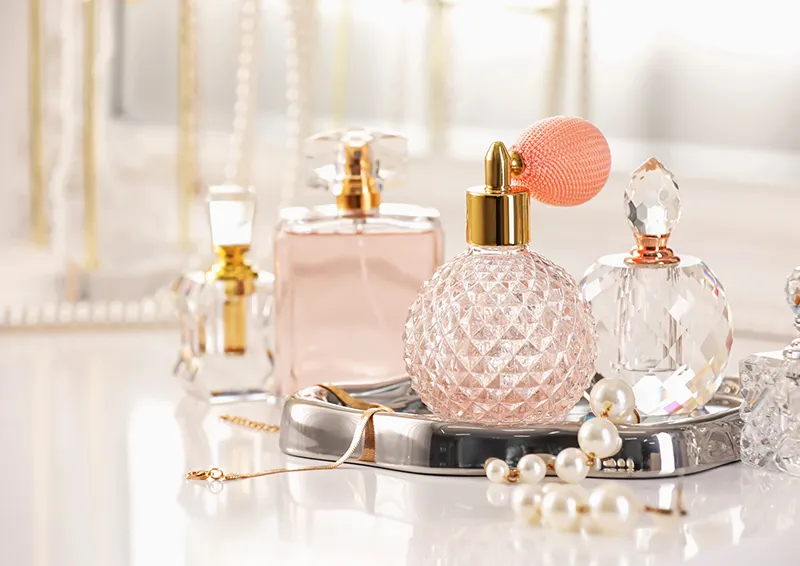
THE ART OF SCENT STACKING
I first heard about scent stacking from Lauren, who, on a good day, layers roughly three scents at once. Three!
It sounds like the olfactory equivalent of wearing sequins to the supermarket. But somehow, she makes it work. Scent stacking is also emerging as a growing fragrance trend in Europe, with perfume lovers layering different scents to create something more individual.
Single perfumes aren’t going away. Some are so well made they don’t need anything added. But stacking lets you be creative in a new way.
You could mix vanilla with musk, citrus with woods, rose with oud, or a creamy sweet scent with something smoky and unexpected.
The trick is knowing what works together. And if you have a good nose for fragrance, it can become quite the skill.
It’s perfume as personal styling: a little bit of this, a little bit of that, and hopefully something that smells entirely like you.
THE END OF “HIS” AND “HERS”
For years, perfume counters sorted scents into floral and sweet for women, and woody, spicy, or leathery for men. But perfume itself isn’t tied to gender.
Oud can feel feminine. Rose can be masculine. Vanilla might be dark and smoky. Leather can be sensual. Musk can be soft.
Increasingly, we’re choosing fragrance based on what we actually like rather than what we’re told we should wear.
The only question that really matters is: Do I like it?
THE ART OF THE FIRST SPRITZ
Finding a scent you love takes more patience than just spraying three perfumes and picking your favourite right away.
Why does it smell different on skin? Because your skin becomes part of the equation. Oils, temperature and moisture can all influence how a fragrance develops.
How long should you wait? Don’t judge it on the first spritz. Give the top notes time to fade and the heart and base to emerge. If you’re seriously considering buying it, wear it for a while.
Should you rub your wrists together? No need. Let the fragrance settle naturally.
Where should you spray? Wrists, neck and behind the ears are traditional pulse points. A light touch is usually enough.
How many can you test? Fewer than you think. Once you’ve smelled too many, everything starts becoming one big, vaguely floral blur.
Take a break, get some fresh air and reset your nose.
And don’t buy a perfume simply because it smells wonderful on someone else. The perfect fragrance is personal.
Perhaps the biggest change in fragrance isn’t about a certain scent or brand. It’s about having the freedom to choose what you like. To wear something traditionally marketed to another gender. To love vanilla one day and oud the next. To layer two completely different fragrances. To choose perfume because it reminds you of somewhere, someone or some version of yourself.
We don’t wear the same clothes every day, so why should we always smell the same?
If Lauren’s collection teaches us anything, it’s that you can’t have too many perfumes. Each one matches a different mood, memory, or side of yourself, just waiting for its moment.
Or, as Lauren would say, there’s always space for one more.