


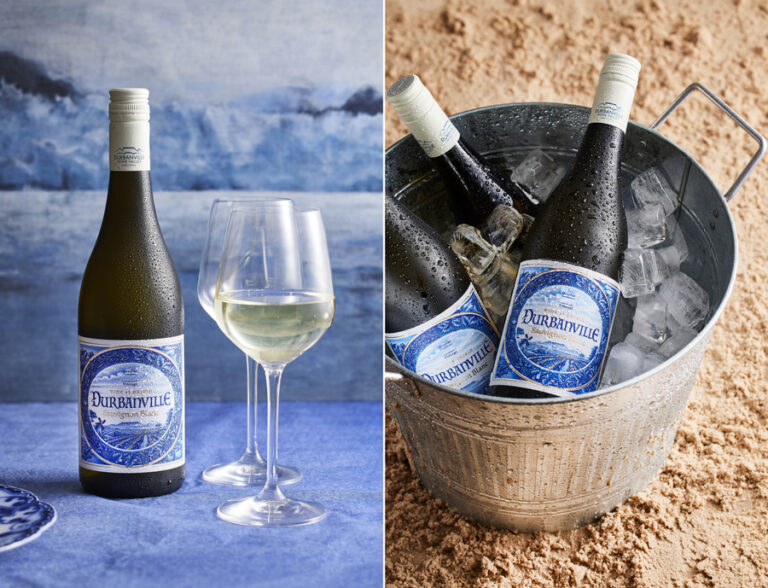

Durbanville’s reputation as one of South Africa’s leading Sauvignon Blanc regions is increasingly shaped by a quiet but consistent sense of collaboration between producers. Now in its fifth consecutive vintage, the Durbanville Sauvignon Blanc collaborative blend has settled into something that feels less like a project and more like a shared rhythm across the valley, bringing together multiple wineries under a single expression of place that is defined by cool climate conditions, elevation, and the Atlantic influence that runs through it all.
The 2026 vintage draws on fruit from a 12-winery collective including Diemersdal, De Grendel, D’Aria, Durbanville Hills, Groot Phesantekraal, Klein Roosboom, Maastricht, Nitida, and others across the valley. It is not built around the idea of a single estate voice, but rather a layered interpretation of the region itself, shaped by different sites, exposures, and vineyard conditions that sit within the same broader coastal system.
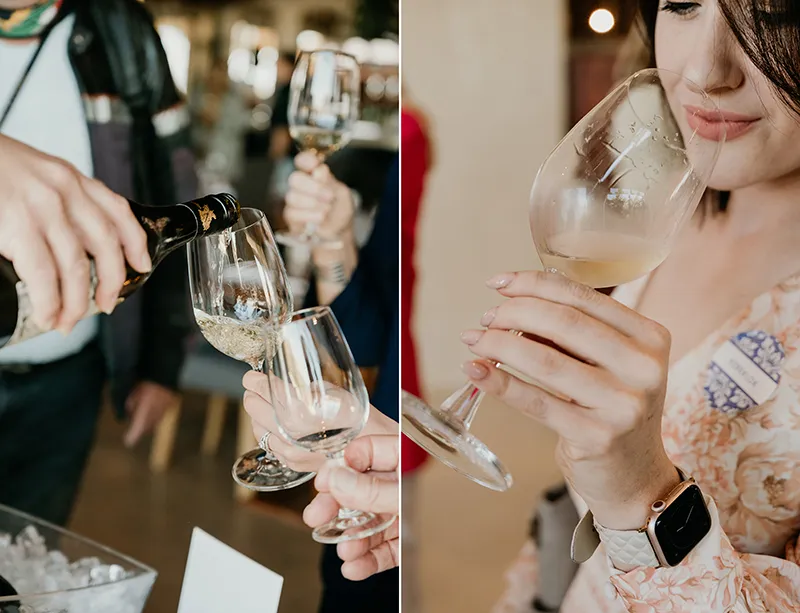
The “From Sea to Sip” experience hosted by the Durbanville Wine Valley was designed as a way of tracing that influence back to its source. The day began at Durbanville Hills before moving gradually toward the coast alongside guides from Durbanville Wine Safari, who layered in context around the valley’s geography, its farming history, and the climatic patterns that define it. As the route shifted out of the vineyards and toward the Atlantic, the language of cool-climate winemaking began to feel less theoretical and more physically present in the environment itself, in the way the air changed, and in how the landscape slowly opened toward the sea.
At Melkbosstrand, that connection between vineyard and ocean became more real. The coastline sits in contrast to the cultivated slopes of Durbanville. Along the shoreline, we were introduced to the different seaweed ecosystems, learning to distinguish between green, brown, and red varieties and how they function both ecologically and in food systems. It was a simple but grounding part of the day, moving between explanation and observation, with time spent in rock pools and let us scavenge for the varieties that were going to become our lunch.
What became clearer throughout the day was that the cooling effect of the ocean, carried inland through consistent breezes and seasonal patterns, plays a direct role in moderating temperatures across the slopes above, slowing ripening and shaping the conditions under which Sauvignon Blanc develops. Back in the vineyards, that influence translates into a growing season that is measured rather than extreme, allowing fruit to develop gradually while retaining freshness and natural acidity. In the glass, that tends to express itself in wines defined by citrus-driven aromatics, clean fruit profiles, and a sense of structural clarity rather than weight. Across the valley, the result is not a single unified style, but a collection of subtle variations shaped by site and microclimate, all sitting within the same coastal influence that defines Durbanville as a region.
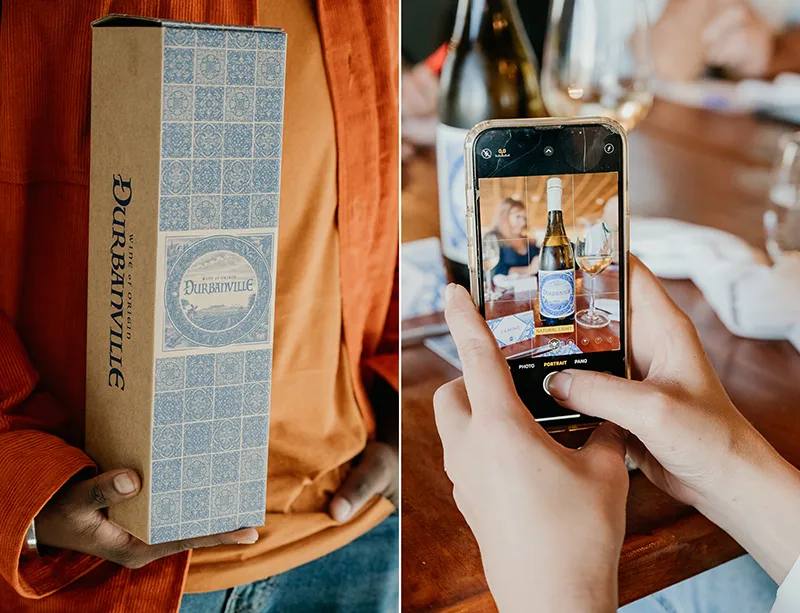
The tasting at De Grendel Restaurant brought those differences into focus, with Sauvignon Blancs from across the valley poured side by side. Each wine offered its own interpretation of place, but there was a shared thread of brightness and acidity that ran through them, regardless of producer. Alongside the wines, lunch was served using the same seaweed varieties we had gathered earlier in the day, each dish leaning into a different type and bringing that coastal lesson back onto the plate in a more direct, edible form.
The highlight of the afternoon was the unveiling of the 2026 Durbanville Sauvignon Blanc collaborative blend. The wine has notes of white pear, litchi, tropical stone fruit, and citrus, before moving into a palate that is both fresh and composed. It brings together fruit from across the valley in a way that reflects both the individuality of the contributing vineyards and the shared conditions that define them.
More than anything, the 2026 vintage reflects how Durbanville’s identity has started to take shape collectively rather than through individual estates alone. There is a clearer sense of the valley speaking with one voice, where collaboration now forms part of how it presents itself, both in the bottle and in the experiences around it. It feels like a milestone in five years of that process, and a region becoming more comfortable defining itself through unity rather than separation.