


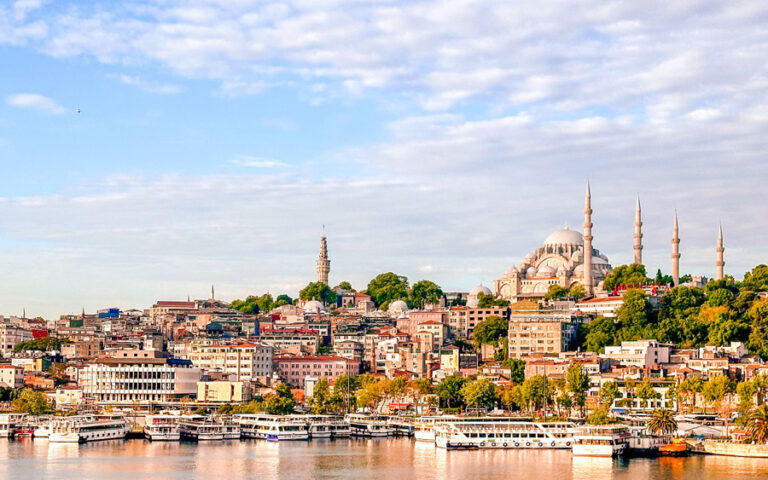

From the busy streets of Istanbul and the ferries on the Bosphorus to the turquoise Mediterranean and the unique landscapes of Cappadocia, Türkiye brings together history, culture, food and adventure.
Türkiye is one of those places where you can find almost everything in a single trip. You’ll see ancient cities and modern metropolises, Mediterranean beaches and otherworldly landscapes, busy bazaars and quiet villages. There is extraordinary food, generous hospitality and the curious feeling that wherever you go, you are walking through several thousand years of history at once.
Türkiye has been home to Greek, Roman, Byzantine, Ottoman and Turkish cultures. It lies between Europe and Asia, and the scenery and traditions shift from region to region. Maybe that’s why it’s so fascinating; it never fits into just one category.
You can spend the morning wandering through an ancient palace in Istanbul, the afternoon crossing between continents on a ferry, a few days later swim in the Mediterranean, and then find yourself floating above the surreal rock formations of Cappadocia.
ISTANBUL: WHERE EAST MEETS WEST
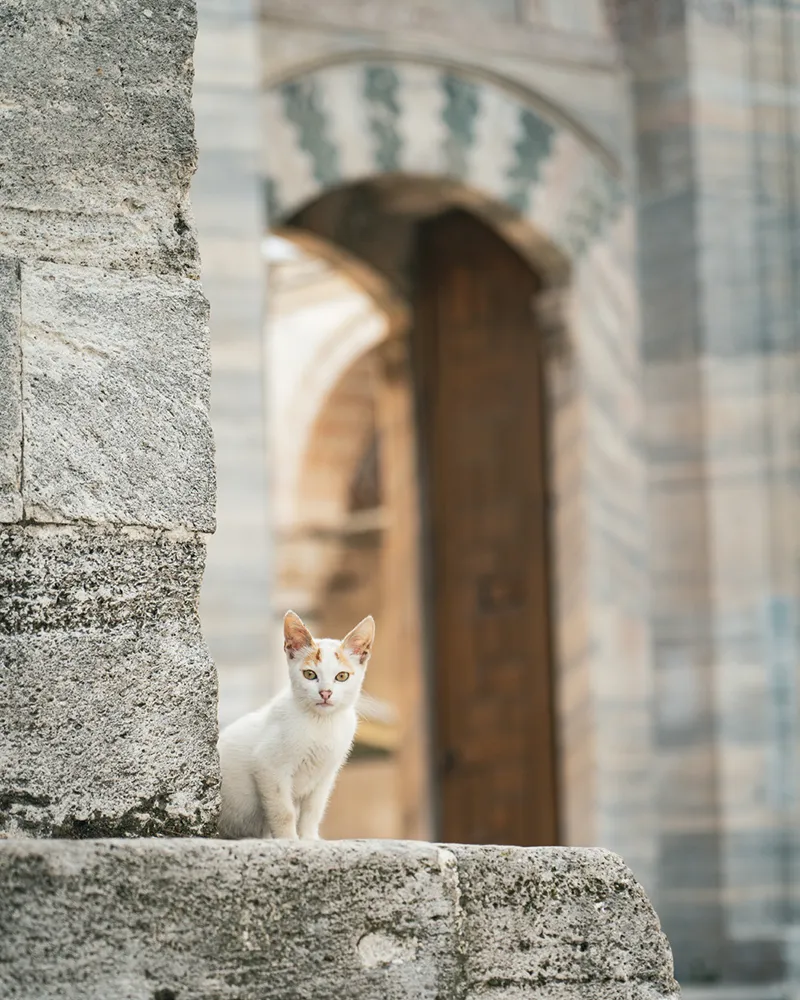
Istanbul is huge, lively, beautiful and sometimes a bit overwhelming. But it’s also a place where getting lost can be part of the fun. The city almost encourages it. One of my favourite writings about Istanbul even lets the city speak through its cats:
“If you’re hesitant, not sure which way to go, follow one of my cats. They will lead you to places, introduce you to people, point out secrets they keep even from me. They, more than anyone, are the longest-continuing residents of the city.” – Gündüz Vassaf.
That seems fitting. The cats in Istanbul aren’t strays as we might think. They’re cared for by shopkeepers, locals and people passing by. You’ll see food and small shelters for them all over the city, and they stroll through cafés, markets, mosques, and along the waterfront as if they’ve always belonged there. In a way, they have.
Istanbul has witnessed so much over time. It has seen empires come and go, standing patiently through the centuries.
THE BOSPHORUS: BETWEEN TWO CONTINENTS
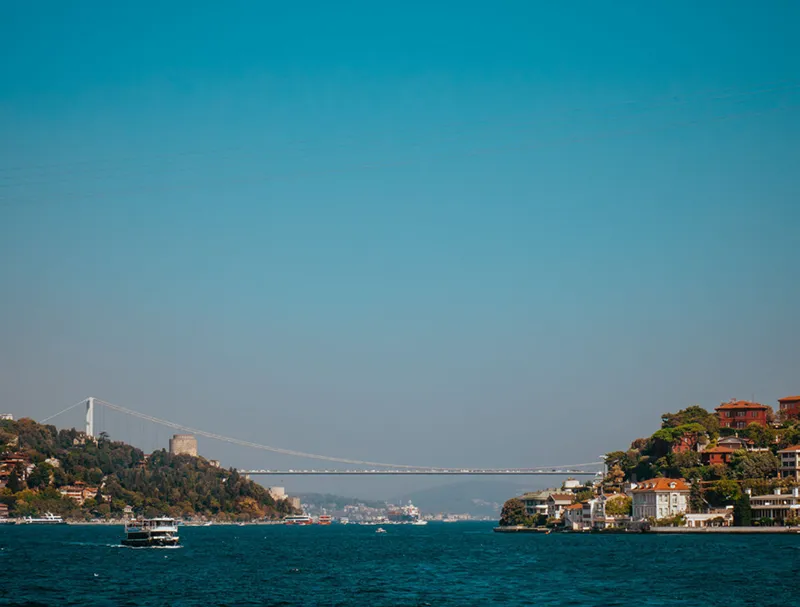
The Bosphorus is the narrow strait that separates Europe from Asia, and you can’t understand Istanbul without understanding the water running through its middle.
One minute you are looking at the European side, the next the Asian shore, with ferries constantly crossing between them. Palaces, mosques, old waterfront houses, and modern apartment blocks line the banks, and the whole city seems to spill toward the water.
Taking a ferry is one of the easiest ways to experience the Bosphorus. These public ferries aren’t just for tourists; they’re a part of daily life, carrying people between the two sides of the city.
There is something particularly satisfying about seeing the city from the Bosphorus. Istanbul can feel impossibly dense when you are walking through it. From the water, it suddenly makes sense.
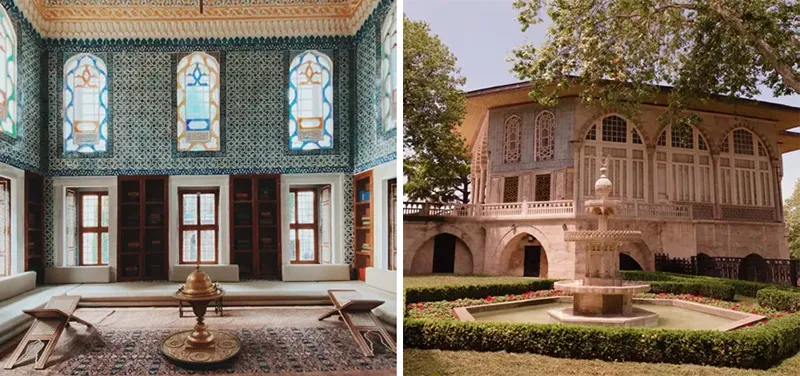
If the Bosphorus shows where Istanbul is, Topkapı Palace helps explain what the city has become.
For nearly four hundred years, the palace was the heart of the Ottoman Empire and home to its sultans. Instead of one huge building, Topkapı is a series of courtyards, gardens, rooms and terraces, all with views of the Bosphorus. It’s easy to see why this spot was so important. The palace is grand, but what stands out most is how naturally it blends into the city.
A TASTE OF TÜRKİYE
Eventually, though, even the grandest history makes you hungry.
Turkish food is one of the country’s great pleasures, and it changes considerably from region to region. A Turkish breakfast is less a meal than an event. There are cheeses, honey, rose petal jam, olives, cucumber and tomato glistening with olive oil, glazed fruits, chillies, aubergines and spinach, onion and cheese pies. There is sweet and salty and spicy, often all on the same table. And there is bread. Lots of bread.
The Turkish word sofra means dining table, but it’s more than just a place to eat. Meals are shared, and hospitality is a big part of it. Whether you’re alone or with others, the table is always filled with enough food for everyone nearby. There’s a generosity that makes even a simple breakfast feel rich and abundant.
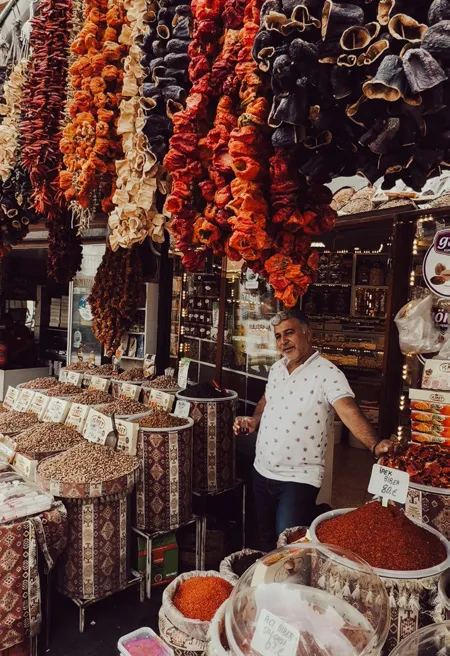
In Istanbul, the Grand Bazaar and Spice Bazaar offer a particularly colourful introduction to the country’s ingredients and flavours. There are spices, dried fruit, nuts, sweets, tea and an almost endless supply of things you did not realise you wanted until somebody put them in front of you.
But the real pleasure is sitting down to eat. Plates appear in the middle of the table rather than in front of individual people. Cooking and eating are communal. One dish becomes several, several become a feast, and somehow another plate always arrives.
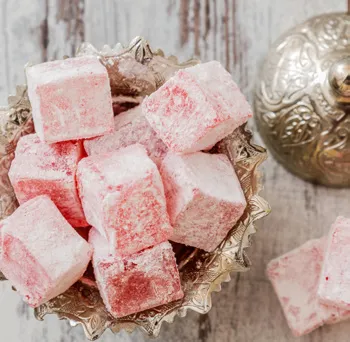
And Turkish food is far more than kebabs. A dish like Hünkar Beğendi, or Sultan’s Delight, is a rich lamb stew served over a silky aubergine purée. Aubergine appears everywhere, alongside onions, garlic, yoghurt, olive oil, herbs and spices. Elsewhere, you will find meze, freshly baked pide and gözleme (breads), seafood, baklava and Turkish delight.
As you travel, the food changes again. The Aegean and Mediterranean areas offer lots of seafood, vegetables, olive oil and herbs. Southeastern Türkiye is famous for spicier dishes. The long coastline means plenty of fresh fish, while inland areas have their own breads, stews and grilled meats. There’s also plenty of good wine.
Although Türkiye is sometimes seen through clichés, its food alone is a good reason to take a closer look.
HAGIA SOPHIA: HISTORY IN LAYERS
And then there is Hagia Sophia. It is difficult to think of a building that better represents Istanbul’s ability to collect history and refuse to throw any of it away.
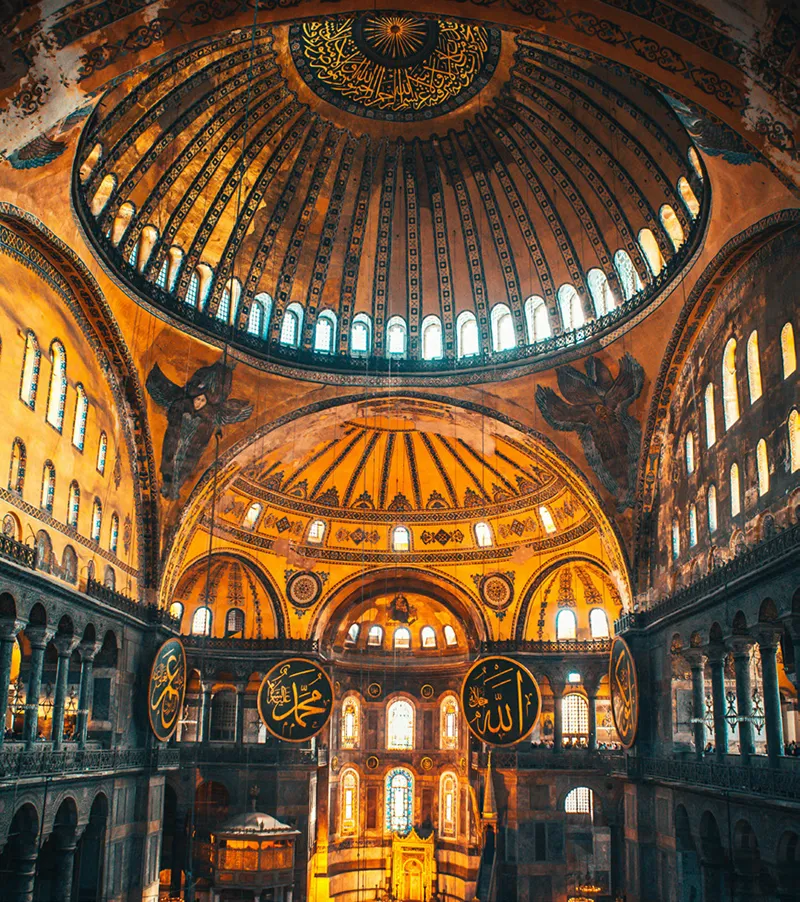
Built in the sixth century as a Byzantine cathedral, Hagia Sophia later became an imperial mosque, then a museum and, since 2020, once again a mosque. It has witnessed the transformation of Constantinople into Ottoman Istanbul and survived into the modern city.
When you stand inside, it’s hard to tell where one layer of history ends and another begins. Christian mosaics sit next to Islamic calligraphy. Byzantine design blends with Ottoman changes. The building has grown with the city instead of just lasting through time.
That, in many ways, is Istanbul. It is not really a city of one culture replacing another. It is a city of cultures sitting on top of one another, sometimes awkwardly, sometimes beautifully, but almost always visibly.
And then, inevitably, you walk outside and find a cat sitting on the steps as though none of this is particularly impressive.
THE HAMMAM: RELAXATION WITH HISTORY
Another part of Türkiye’s culture is less monumental, but perhaps more intimate.
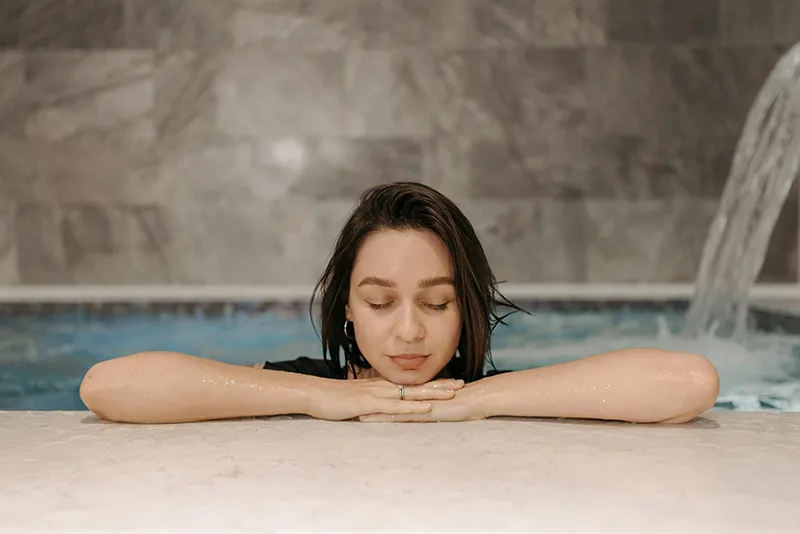
The Turkish hammam isn’t just a spa treatment. It is a centuries-old bathing tradition, built around heat, water, cleansing and ritual. A visit can feel both deeply traditional and surprisingly luxurious, particularly after a day spent walking the cities.
The tradition extends far beyond Istanbul. Türkiye has a wealth of thermal springs and mineral waters, with bathing and wellness playing an important role in many regions. Modern thermal resorts have built on practices that go back centuries, offering everything from traditional treatments to contemporary spa experiences.
It’s another example of how, in Türkiye, even relaxing comes with a sense of history.
THE TURQUOISE COAST
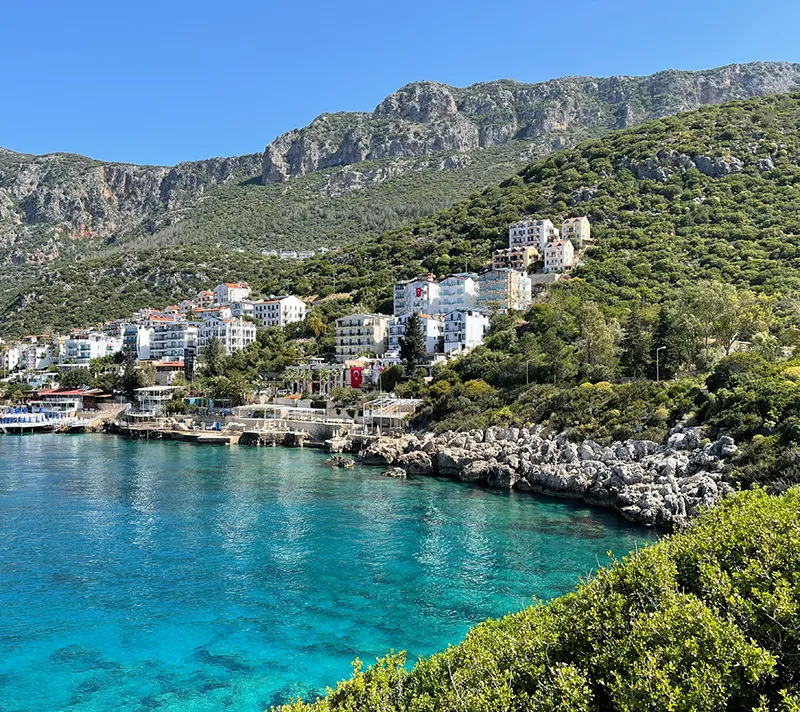
The Turquoise Coast is not a single destination but a long stretch of spectacular shoreline along southwest Türkiye, encompassing everything from the major hubs of Antalya and Bodrum to smaller coastal towns such as Fethiye, Marmaris and Kaş.
The coastline could easily fill an entire trip of its own. It rivals some of the Mediterranean’s best stretches, with impossibly blue water, pine-covered mountains, secluded coves and sophisticated resorts. But the appeal is not just lying on a beach.
Taking a traditional gulet cruise is a great way to see the coast. These wooden boats take you to hidden bays you can’t reach by car, where your day is all about swimming, eating lunch and relaxing in the sun.
The region is also rich in ancient history. Ruins are scattered across the region, sometimes sitting almost casually alongside modern resorts and fishing villages. The ancient cities of Lycia are particularly evocative, with tombs, theatres and stone remains appearing among the landscape.
In Fethiye, the water and mountains look like a movie scene, while Kaş feels more laid-back and bohemian. Bodrum mixes its ancient history with fancy restaurants, hotels and nightlife. Antalya is a big, lively Mediterranean city.
The beauty of the region is that you can make the trip as active or as lazy as you like.
One day might involve exploring ancient ruins, the next a boat trip between secluded coves and the day after that absolutely nothing beyond swimming, lunch and a book.
It is another version of Türkiye: warmer, slower and more Mediterranean than Istanbul, but just as deeply connected to the country’s history.
Then there’s Cappadocia, which feels completely different from both the coast and Istanbul.
CAPPADOCIA: ANOTHER PLANET
If Istanbul feels like a city built over thousands of years, Cappadocia feels like a different planet.
This area in central Türkiye is known for its unusual, almost moon-like landscape made of soft volcanic rock shaped by millions of years of erosion. The result is fairy chimneys: tall, cone-shaped rocks that look as if they were sculpted on purpose.
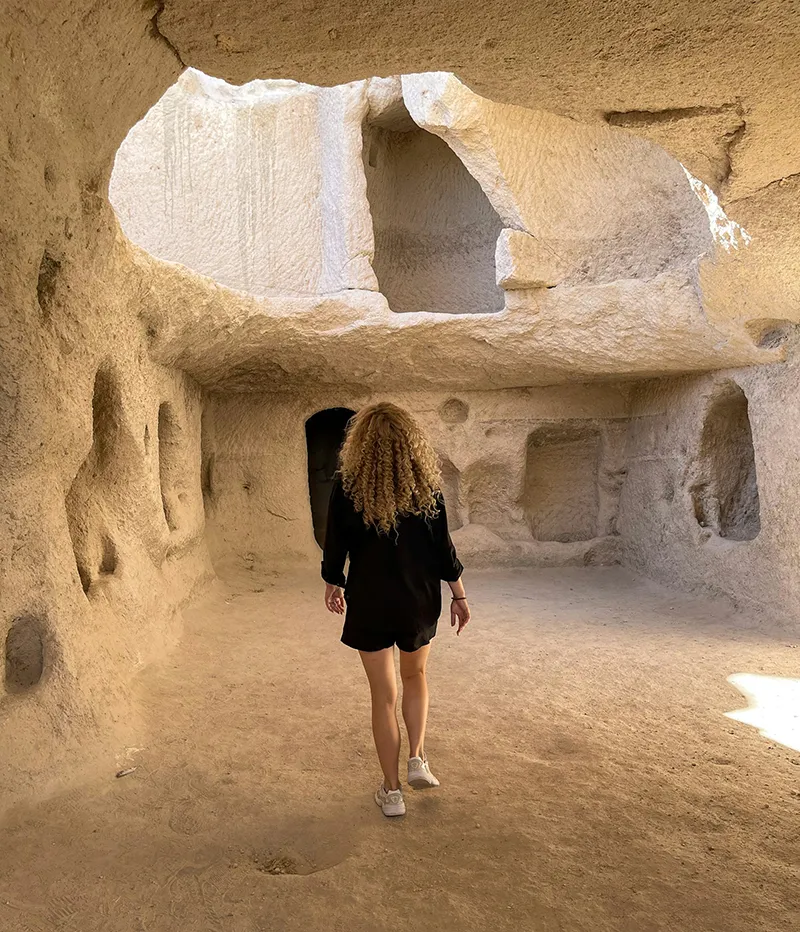
But the strangest thing about Cappadocia is that people didn’t just live around these formations. They lived inside them.
Travelers have visited this region for thousands of years, and Cappadocia is even mentioned in the New Testament. Early Christians carved churches and monasteries into the rock, and sometimes went underground when they needed to.
BALLOONS AT SUNRISE
Most people know Cappadocia for its balloons.
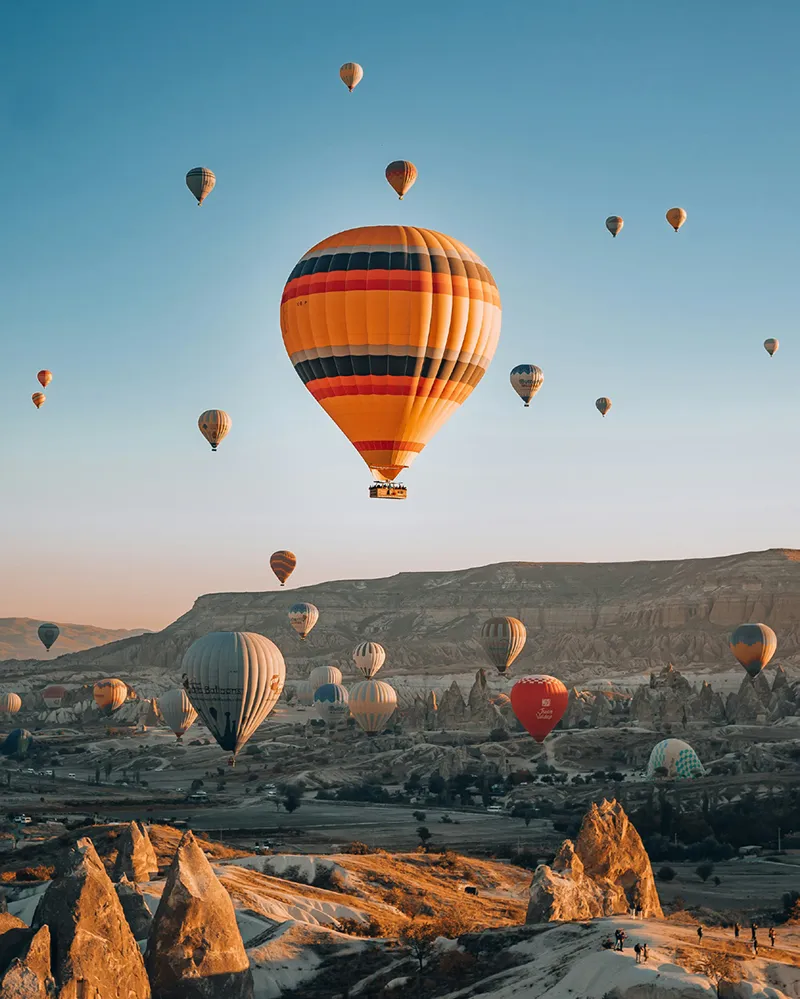
At sunrise, the sky fills with them, drifting above the fairy chimneys and valleys as the sun comes over the horizon. It is one of those travel photographs that seems almost too perfect to be real. And if you have actually done it, you’ll know the photograph does not quite prepare you for the experience. A balloon flight can feel like the highlight of an already packed trip, particularly the strange peacefulness of floating silently over the landscape with hundreds of metres of air between you and the ground.
You might not know that, as long as the weather is good, balloons fly in Cappadocia all year round. It’s not just for festivals or special occasions. September is an especially beautiful time to go.
INSIDE THE ROCK
When you see Cappadocia from above, you really notice how vast it is.
The dark holes scattered across the rock formations are not random marks. They are windows and doors, remnants of homes, churches and entire communities carved into the stone. Civilisations have come and gone, but their presence is still imprinted on the countryside.
On the ground, the Göreme Open Air Museum brings some of that history into focus. The site is filled with rock-cut churches and monasteries, many decorated with Byzantine frescoes. It is one of the clearest reminders that Cappadocia’s strange landscape wasn’t only something people admired. It was somewhere they built their lives.
The soft volcanic rock here was very useful. People could carve, shape and hollow it out, turning the landscape into homes, churches and shelters. After seeing this, it’s hard to look at a fairy chimney and see just a rock.
Then you head underground.
Cappadocia’s underground cities might be its most amazing feature. Whole communities were carved into the rock, with rooms and tunnels built to shelter people and animals below ground.
The exact history of individual underground complexes is complicated, with different periods of construction and use, but their scale is extraordinary.
Visitors often say the experience is a bit claustrophobic but very interesting. You squeeze through tight passages and go down level after level, realizing you’re inside something built to keep the outside world out.
It is another example of the strange contradiction at the heart of Cappadocia: the landscape looks delicate, almost whimsical, but its history is one of survival.
Finally, climb back up to Uçhisar Castle.
Uçhisar Castle is a huge natural rock formation carved into a fortress that rises above the surrounding landscape. From its summit, Cappadocia stretches out in every direction: valleys, villages, fairy chimneys and the little cave openings scattered across the rock. It is perhaps the best place to understand what makes the region so special.
On the ground, Cappadocia looks like a group of amazing rock formations. From above, it turns into one vast landscape.
SO, WHY TÜRKİYE?
That might be the best way to think about Türkiye as a whole; it’s a country that never fits into just one category.
It is Europe and Asia. It is Byzantine and Ottoman. It is ancient history and modern city life. It is a breakfast table overflowing with cheese, honey, olives and bread, followed by a glass of wine and a lamb stew that tastes like somebody has been perfecting it for a thousand years.
It’s Istanbul’s ferries moving between continents, the Mediterranean coastline in the southwest and Cappadocia’s balloons floating over a landscape shaped by both nature and people.
It’s history you can walk through, food to share, landscapes that seem unreal and a culture that has taken in many influences without losing itself.
Maybe that’s why it’s so hard to describe Türkiye without making it sound like several countries at once. The best thing to do is just visit.
And if you’re not sure where to begin, just follow the cat.