


A love letter to German engineering, and the four marques that helped define the motor car.
There are faster cars. More expensive cars. More dramatic cars.
Newcomers are arriving with enormous screens, outrageous power figures, and specification sheets long enough to require an intermission.
But there is something about the Germans.
Maybe it is because, for brands like Audi, BMW, Mercedes-Benz and Volkswagen, engineering has never been about producing the next new thing. It has been about refining an idea over decades. Sometimes more than a century.
And that is what makes these four brands particularly interesting right now.
We are living through one of the biggest shake-ups the automotive industry has seen. Electrification is rewriting the rulebook. Software is becoming as important as horsepower. New manufacturers are emerging at an extraordinary pace and, particularly in South Africa, buyers suddenly have more choice than they have had in years.
So where does that leave the old guard? Exactly where you would expect them to be: evolving.
Because German engineering was never really about standing still.
AUDI
Progress through technology, literally.
The four rings themselves tell the first part of the story. They represent Audi, DKW, Horch and Wanderer, the four manufacturers brought together to form Auto Union in 1932.
But modern Audi’s identity was arguably forged through its willingness to challenge convention.
In 1971 came three words that would become one of the most recognisable phrases in automotive history: Vorsprung durch Technik. Advancement through technology.
It is an advertising line, yes, but Audi spent decades giving it credibility.
Five-cylinder engines. Aerodynamics. Lightweight construction. Turbocharging. And, of course, quattro.
When the Audi quattro appeared in 1980, permanent all-wheel drive was not the obvious recipe for a performance road car. Then Audi went rallying and demonstrated rather spectacularly why it might be. The technology helped Audi claim World Rally Championship honours and fundamentally changed perceptions of what all-wheel drive could do in a performance car.

Today, quattro feels completely normal. That is often the greatest compliment you can pay genuinely influential technology: eventually everyone forgets there was a time before it.
South Africans have developed their own appetite for it too. More than 62,233 quattro models have been sold locally since 1977, while South Africa remains Audi’s largest market on the African continent.
And Audi’s next chapter is already unfolding. The five-cylinder lives on in the RS 3. RS remains gloriously excessive. At the opposite end of the engineering spectrum, cars such as the RS e-tron GT performance show that electrification doesn’t necessarily mean removing the theatre from performance.
The technology changes. The philosophy doesn’t have to.
MZANSI FAVOURITE: AUDI RS 3 – FIVE CYLINDERS OF BAD BEHAVIOUR
There are sensible Audis. And then there is the RS 3.
South Africa has an unusually strong appetite for Audi Sport, ranking third globally for Audi Sport’s share of total Audi sales in 2025. So choosing a Mzansi favourite from Ingolstadt was never going to be a diesel Q-something.
The RS 3 represents everything South Africans love about fast German cars: compact dimensions, serious performance, quattro traction and an engine with a soundtrack that is immediately identifiable.
Audi’s five-cylinder story stretches back 50 years, achieving cult status locally through cars including the Audi 100 and later Audi 500. Today that bloodline lives on through the RS 3’s 2.5 TFSI five-cylinder engine.
It is small enough to commute in, fast enough to embarrass considerably more exotic machinery and makes enough noise to ensure your neighbours know precisely when you have arrived home. Very South African, really.
WHY MZANSI LOVES IT: That five-cylinder soundtrack, quattro grip, huge performance from a compact car and the ability to remain understated until you put your foot down.

JUST LANDED: THE ALL-NEW AUDI Q5
The third-generation Audi Q5 went on sale in South Africa on 1 September 2026, essentially as this edition of Aspire was being put together.
The Q5 has been one of Audi’s strongest-selling models locally for more than 15 years. The new generation arrives as an entire family rather than a single model. Audi has not reinvented one of its most successful SUVs; it has sharpened exactly what South Africans already liked about it. Sometimes German engineering is knowing when not to mess with the recipe.
QUICK FACTS
Generation: Third
Models: Q5 SUV, Q5 Sportback, SQ5 SUV and SQ5 Sportback
Engines: Petrol, diesel and performance V6 options
Starting price: R1,275,000 for the Q5 Sportback; R1,295,000 for the Q5 SUV
Design: New-generation Singleframe treatment with a considerably more digital cabin
Why it matters: A sharper version of a recipe South Africans already love

BMW
When engineering developed a personality.
If Mercedes-Benz helped invent the motor car, BMW spent much of its history making us care deeply about how it feels.
Enthusiasts can become slightly insufferable when discussing old BMWs. They will tell you about steering feel. Weight distribution. Naturally aspirated straight-sixes. The perfect driving position. They will tell you that this particular generation was the last proper one. And then they will probably send you a link to one for sale.
But beneath the nostalgia is something important. BMW understood early that engineering didn’t have to be clinical. It could create emotion.
The relationship between driver, chassis and engine became part of the brand’s identity, eventually giving us everything from the great 3 Series generations to the wonderfully excessive world of BMW M.
South Africa occupies an unusually important chapter in that story. In 1973, BMW established Plant Rosslyn outside Pretoria as its first manufacturing facility outside Germany. The plant would go on to produce multiple generations of the 3 Series for global markets before transitioning to X3 production in 2018.
That means BMW’s South African history isn’t simply a sales story. We built them. More than that, generations of South Africans grew up with them.
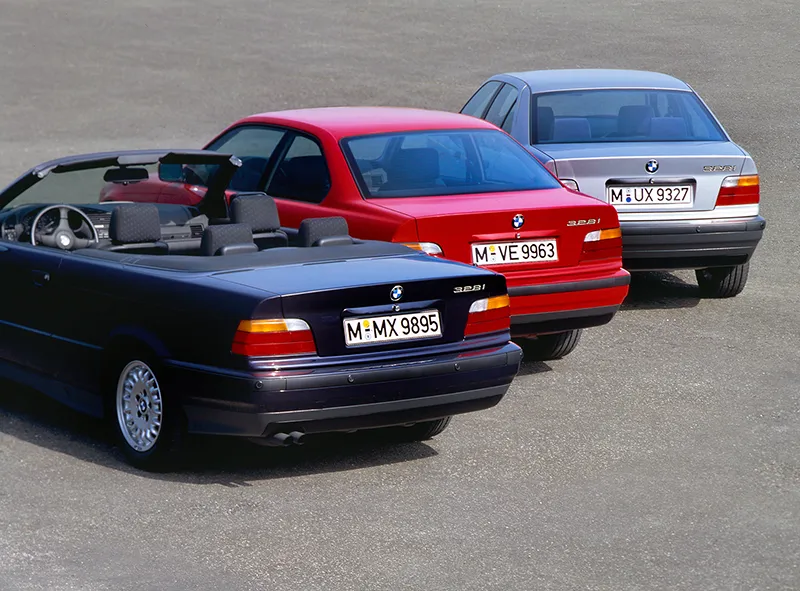
The box-shaped BMWs, the 325i, the unmistakable straight-six soundtrack, the motorsport stories and the cars that became part of South African street culture gave BMW a local identity few international premium manufacturers ever manage to achieve.
Ask South Africans of different generations about BMW, and you will get very different stories. That is exactly the point. A true legacy brand doesn’t just have a history. It becomes part of yours.
MZANSI FAVOURITE: BMW 325iS – THE GUSHESHE
Some cars are sold in South Africa. Others become South African. The BMW 325iS belongs firmly in the second camp.
Built specifically for South Africa and introduced locally in 1990, the E30 325iS became known simply as Gusheshe, meaning ‘the quick one’. It holds a similar place in South African hearts to the E30 M3 in Germany.
The road-going 325iS initially produced 145kW, before an engine upgrade lifted output to 155kW in 1991. Just 517 examples of the South Africa-only model were built. Its motorsport pedigree, straight-six soundtrack and unmistakable E30 silhouette turned it from homologation special into cultural icon.
Today, Gusheshe means spinning culture, township car culture, Sunday drives, motorsport, music videos, collectors and fathers telling their children about the BMW they should never have sold.
WHY MZANSI LOVES IT: Straight-six. Rear-wheel drive. Local history. Motorsport pedigree. And enough attitude to remain cool more than three decades later.

THE LATEST WORD FROM BMW: BMW iX2 eDRIVE20
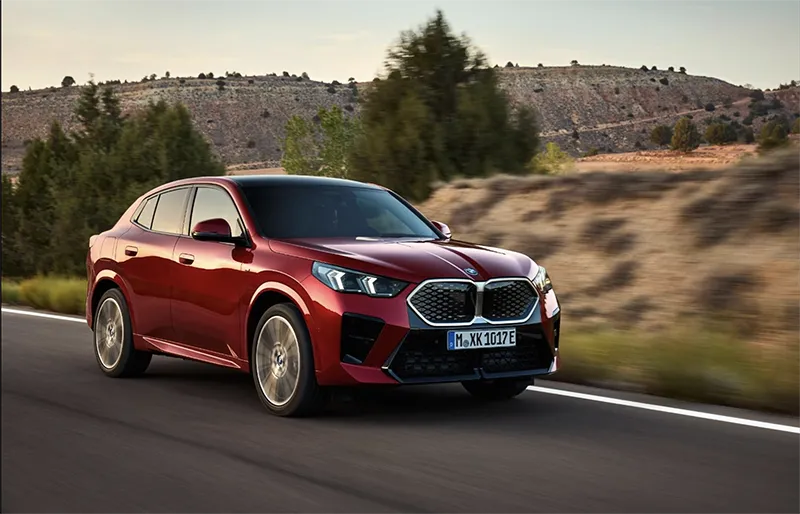
BMW’s most recent addition to its local electric offering is the iX2 eDrive20, announced for South Africa in July 2026. It gives BMW a more accessible fully electric entry into its Sports Activity Coupé family.
It is a good snapshot of where BMW stands today: the company that made its name building brilliant straight-six driver’s cars is now applying that engineering obsession to batteries, efficiency, software, and electric mobility. The propulsion may be changing. The badge certainly isn’t.
QUICK FACTS
Powertrain: Fully electric
Claimed range: Up to 470km
Body: Compact Sports Activity Coupé
Why it matters: Another step in making BMW’s electric range less niche and more attainable
MERCEDES-BENZ
Before cars became technology, they were engineering.
To understand Mercedes-Benz, you almost have to go back to the beginning of the motor car itself.
In 1886, Carl Benz patented what is widely regarded as the world’s first practical automobile, while Gottlieb Daimler was developing his own approach to motorised transport. The companies these pioneers created would eventually come together as Daimler-Benz in 1926.

Think about that for a second. Today we casually debate whether a Mercedes should have a bigger infotainment screen or another 50kW. This company’s lineage stretches back to the moment humanity was still figuring out what a car should actually be.
That history carries weight. Mercedes-Benz has spent generations pursuing a particular interpretation of the automobile: engineering mixed with luxury, safety, comfort and, when AMG gets involved, a healthy amount of lunacy.
The three-pointed star became more than a badge. It became shorthand for arrival.
Yet Mercedes’ relationship with South Africa runs far deeper than the luxury cars parked outside Sandton restaurants.
Mercedes-Benz’s manufacturing story in East London dates back to 1958, when Car Distributors Assembly began contract production of Mercedes-Benz vehicles. Today, the Eastern Cape plant forms part of the brand’s global C-Class production network, manufacturing cars for both left- and right-hand-drive export markets.
That matters. A C-Class rolling down a road somewhere thousands of kilometres from here may very well carry a little South African story with it.
German engineering, built in East London. There is something wonderfully full-circle about that.
MZANSI FAVOURITE: MERCEDES-BENZ C-CLASS – THE BENZ THAT SA GREW UP WITH
Yes, we could have chosen an AMG. The C63 certainly deserves its own love letter. But when you consider the Mercedes-Benz that has probably occupied the most driveways, corporate parking bays, family photographs and aspirational wish lists in South Africa, the C-Class deserves this one.
For decades it has occupied that perfect Mercedes sweet spot: prestigious but usable; luxurious without necessarily shouting about it; big enough for the family, small enough for Joburg traffic and carrying a three-pointed star that, in South Africa, has always meant something.
Another reason it belongs here. We build it. Mercedes-Benz’s East London plant is part of the global C-Class manufacturing network, producing cars for international markets. It is Stuttgart engineering with an Eastern Cape passport.
WHY MZANSI LOVES IT: Comfort. Status. Familiarity. That three-pointed star. Generations of history on our roads, and the fact that South Africa helps build it.

THE NEW KID WITH A VERY BIG BRAIN: MERCEDES-BENZ CLA 200
Mercedes-Benz’s newest major passenger-car arrival in South Africa is the third-generation CLA 200, which arrived at local authorised retailers on 12 June 2026.
This is not simply another pretty compact Mercedes. The new CLA demonstrates where Mercedes believes the automobile is heading: increasingly intelligent, software-led and connected.
At its heart is the new Mercedes-Benz Operating System, or MB.OS, while the cabin can be specified around the MBUX Superscreen experience. The local CLA 200 combines its petrol engine with 48-volt hybrid technology. It is still very much a Benz. It has simply learnt a few new tricks.
QUICK FACTS
Local model: CLA 200
Powertrain: Petrol with 48V hybrid assistance
Technology: New MB.OS architecture
Cabin headline: MBUX Superscreen
Design detail: Star-pattern grille and panoramic glass roof
Why it matters: Mercedes moves from the traditional luxury car towards the intelligent luxury car

VOLKSWAGEN
The people’s car that became part of South Africa.
Perhaps the most democratic of the four, but arguably the one woven most deeply into everyday South African motoring.
Volkswagen has always understood something remarkably difficult to engineer: simplicity.
Making an exotic car impressive is one challenge. Making a car millions of people can afford, use every day, depend on and genuinely love is another entirely.
The Beetle did it. The Golf did it. And in South Africa, the Citi Golf, Polo and Polo Vivo turned that philosophy into something approaching cultural permanence.

Volkswagen’s South African manufacturing story began on 31 August 1951, when the first locally built Beetle rolled off the production line in Uitenhage, now Kariega. Seventy-five years later, more than 4.8 million vehicles have been produced at the facility.
But perhaps the best illustration of South Africa’s place in modern German automotive manufacturing is sitting on that same production line today: the Polo.
Kariega began producing the Polo in 1996. By the end of 2025, 2,017,003 Polos had been manufactured there, with the majority exported. Today, the plant supplies Polo models to 38 countries and serves as the sole manufacturing and export hub for the model for Europe and the Asia-Pacific region.
So the next time someone talks about German manufacturing excellence, it is worth remembering that some of it has an Eastern Cape postcode.
MZANSI FAVOURITE: VOLKSWAGEN GOLF GTI – THREE LETTERS. THAT’S ALL.
GTI. You don’t really need the rest of the paragraph, do you?
Few performance badges have developed the kind of cult following in South Africa that those three letters enjoy. From immaculate examples at car meets to heavily modified versions making noises that probably weren’t discussed during the original engineering meeting in Wolfsburg, the Golf GTI has become part of South African car culture, from kasi streets to coastal highways.
The recipe has always been brilliantly simple. Take a practical hatchback. Give it considerably more performance. Don’t remove the everyday usability. Repeat for generations.
The latest Golf GTI available locally produces 195kW, reaches 100km/h in a claimed 5.9 seconds and still gives you five doors and a boot. School run at 07:00. Breakfast run at 07:30.
WHY MZANSI LOVES IT: Performance without supercar drama. Everyday usability. Generations of street cred. And three little letters South Africans instantly understand.

THE NEW ARRIVAL: SECOND-GENERATION VOLKSWAGEN T-ROC
Volkswagen opened South African pre-orders for the all-new second-generation T-Roc on 18 August 2026, ahead of its official local market launch in early September.
Sitting between the Taigo and Tiguan, it arrives at exactly the right time for an SUV-obsessed market. Volkswagen has pushed it further upmarket, with more expressive styling, a more premium cabin and a stronger focus on digital technology, while keeping it compact enough for everyday urban life.
And while we are talking Volkswagen and South Africa, 2026 marks 30 years of Polo production locally. The Polo has been built here since 1996, and around 70% of those produced at Kariega over that history have been exported. Yes, Volkswagen is German. But after 75 years of manufacturing here, we will forgive South Africans for claiming a little piece of it as our own.
QUICK FACTS
Generation: Second
Positioning: Between Taigo and Tiguan
Body: Compact SUV
South African timing: Pre-orders opened 18 August 2026; introduction scheduled for early September
Biggest change: A more premium, technology-focused interpretation of the original T-Roc
Why it matters: Volkswagen now has an SUV at almost every conceivable size.

WHAT EXACTLY ARE WE PAYING FOR?
This is where the conversation around legacy brands becomes interesting. Because the automotive world has changed. A badge alone is no longer enough.
Today’s buyer can walk into a showroom belonging to a manufacturer that barely registered on the South African radar five years ago and find enormous screens, panoramic roofs, 360-degree cameras, ambient lighting and astonishing levels of standard equipment.
It has forced the established manufacturers to answer a very healthy question: What exactly does a century of experience buy you?
The answer isn’t always something that fits neatly onto a specification sheet.
It is the way a door closes. The way a chassis settles after a bump. The calibration of a steering system. The confidence of a brake pedal. The ergonomics nobody notices because they work.
It is the engineering knowledge gained from millions of vehicles, thousands of engineers, motorsport programmes, failures, breakthroughs and generations of customers.
Legacy should never be an excuse to stop innovating. It should be the foundation from which you innovate.
And that is arguably the greatest challenge facing Germany’s automotive establishment today.
BMW must take the driving experience into an electric age. Mercedes-Benz must redefine luxury as technology becomes democratised. Audi must continue finding new meaning in Vorsprung durch Technik when every manufacturer calls itself a technology company. Volkswagen must continue building cars for ordinary people while the definition of affordable mobility changes around it.
None of those is small assignments. But then, these are not small companies.
MORE SOUTH AFRICAN THAN WE SOMETIMES REALISE
Another reason these brands deserve a moment of recognition in a South African motoring conversation.
They stayed. They invested. They manufactured. They trained people. They exported South African-built cars to the world.
BMW’s Rosslyn operation became the company’s first manufacturing foothold outside Germany. Mercedes-Benz’s East London facility builds C-Class models for global markets. Volkswagen’s Kariega plant has become one of the most important Polo facilities anywhere in the world. Audi continues to make South Africa its largest market on the continent.
Their histories here stretch across generations. And in an industry obsessed with whatever launches next Tuesday, longevity deserves some respect.
Not blind loyalty. Respect. Because heritage only matters if you continue earning it.
Maybe that is the real beauty of German engineering. It isn’t perfection. Anyone who has owned an ageing German performance car outside of a maintenance plan will happily explain that. At length.
It is the pursuit of it.
For more than a century, these companies have competed with each other, borrowed ideas from motorsport, survived wars and economic crises, invented technologies, abandoned others and endlessly attempted to improve the machine sitting on four wheels.
Today that machine may have batteries instead of a fuel tank. Tomorrow it may drive itself for portions of the journey. The dashboard may become a screen, and software may replace some of the mechanical engineering we once obsessed over.
But underneath it all remains the philosophy that built these brands in the first place: Make it better. Then make it better again.
BMW brought us the joy of driving. Audi taught us that technology itself could become a brand identity. Mercedes-Benz helped give birth to the automobile and spent the next century redefining what luxury could mean. Volkswagen proved that great engineering did not have to belong exclusively to the wealthy.
Four brands. Four very different interpretations of the motor car. And thousands of kilometres away from Munich, Ingolstadt, Stuttgart and Wolfsburg, their fingerprints are all over South Africa.
On our roads. In our memories. And, importantly, on our production lines.
That isn’t simply German automotive history. It is part of ours too.
Different badges. Different personalities. Different generations of South Africans arguing over which one is best. And perhaps that’s the greatest compliment we can give them. They stopped being merely German cars a very long time ago.